Magento 2 GraphQL Explorer
Browse every Magento 2 GraphQL query and mutation, with paste-ready headers, body, and cURL.
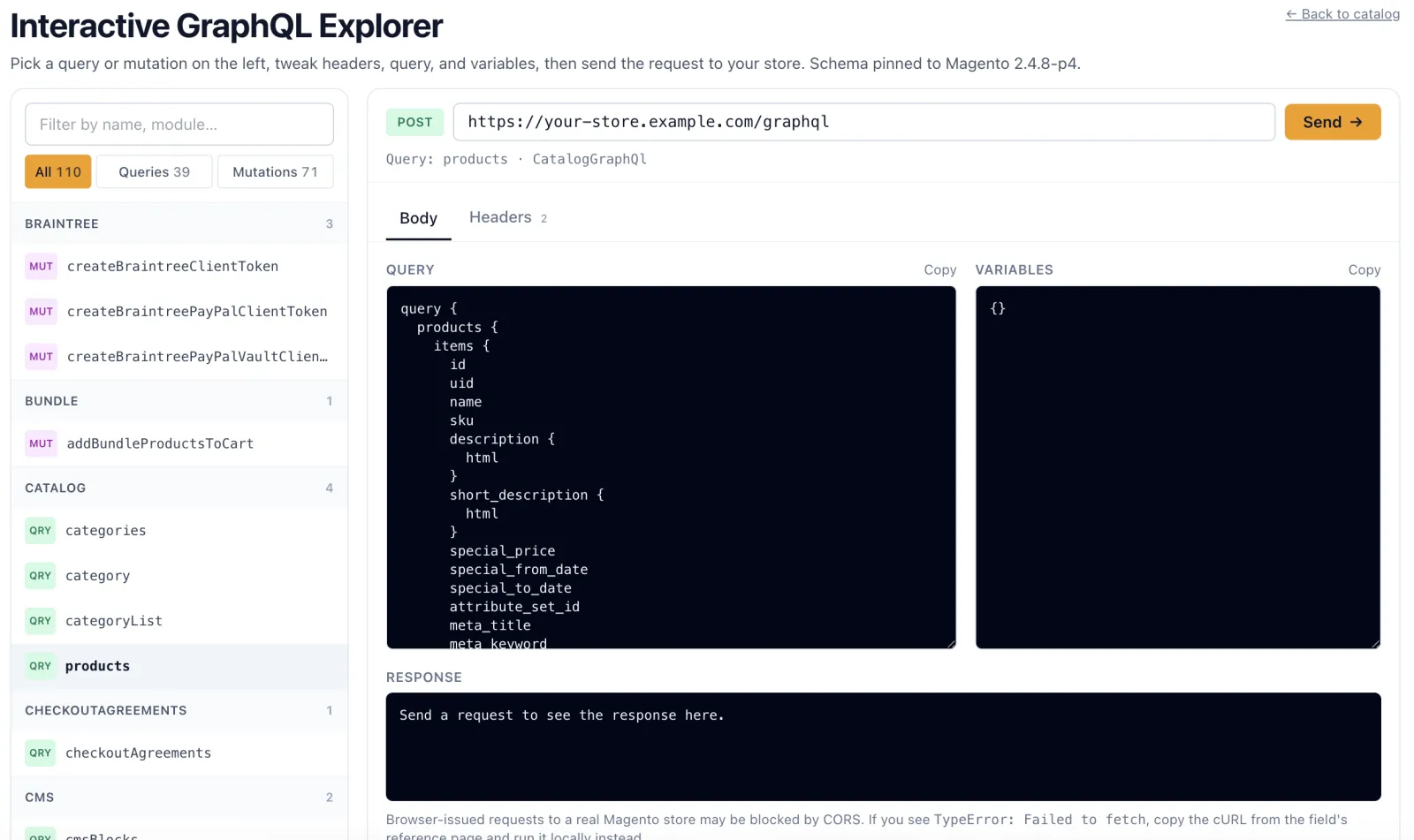

What Magento 2 GraphQL Explorer does
- ✓ Every query and mutation declared by Magento 2 core's *GraphQl modules — Catalog, Customer, Quote, Sales, Payment, CMS, Wishlist, Inventory, and 30+ more
- ✓ Grouped by module — drill into Customer to see generateCustomerToken, customer, customerCart, etc., or jump to Quote for cart, addProductsToCart, placeOrder
- ✓ Per-field detail page with arguments (name, type, required, default, description), return type (linked to its own page), resolver class, cache identity, and deprecation notes
- ✓ Auto-generated examples — paste-ready Headers (Content-Type, Store, Authorization), Variables (JSON), Request body, cURL, and a JavaScript fetch snippet for every field
- ✓ Cross-linked types — args and return types deep-link into the supporting input/object/enum/interface so you can navigate the schema without bouncing through DevDocs
- ✓ Pinned to a specific Magento release — version banner makes provenance explicit; rebuild against a newer source tree by re-running the generator
How it works
Search or browse
Search by field name, description, or module (e.g. cart, customer, products), filter by Queries vs Mutations, or jump straight into a module's surface from the grid.
Open a query or mutation
Per-field page shows arguments, return type, resolver class, cache identity, deprecation notes, and a tabbed example block with Headers / Query / Variables / Body / cURL / JS fetch.
Drill into types
Every type reference (arg type, return type, interface, union member) links to its own page — see the fields it exposes, the modules that contribute to it, and the operations that return it.
Frequently asked about Magento 2 GraphQL Explorer
Where does the catalog data come from? +
It's parsed at build time from every module-*-graph-ql/etc/schema.graphqls file in a pinned Magento source tree. The generator (scripts/graphqlgen) uses vektah/gqlparser/v2 so it understands directives like @doc, @resolver, @cache, and @deprecated.
Are the example requests safe to copy and run? +
They're paste-ready against your store's /graphql endpoint, but you'll need to replace the host, the Store header, and any required values (email, password, IDs). Mutations and customer-scoped queries also need a Bearer token from generateCustomerToken.
Why is the Authorization header sometimes missing? +
Most product browsing queries are cacheable and work anonymously, so they don't need a token. The header appears on mutations, on queries flagged @cache(cacheable: false), and on any field whose resolver class hints at the customer scope.
Does it cover third-party modules? +
Core Magento + the bundled Adobe Commerce *GraphQl modules + PayPal Braintree are included. To add your own module's GraphQL surface, drop its schema.graphqls into a vendor module and re-run the generator — custom-module schema upload is on the roadmap as a per-account feature.
Why don't I see Subscriptions? +
Magento doesn't ship a GraphQL Subscription root. The catalog only emits Query and Mutation; Subscriptions would be added if a future Magento release introduces them.
Can I run a query against my store from this page? +
Not yet — the explorer is a read-only catalog so it stays public and indexable without managing per-user store credentials. A 'try it out' panel that proxies to your endpoint is a candidate for a Pro tier.
Related tools
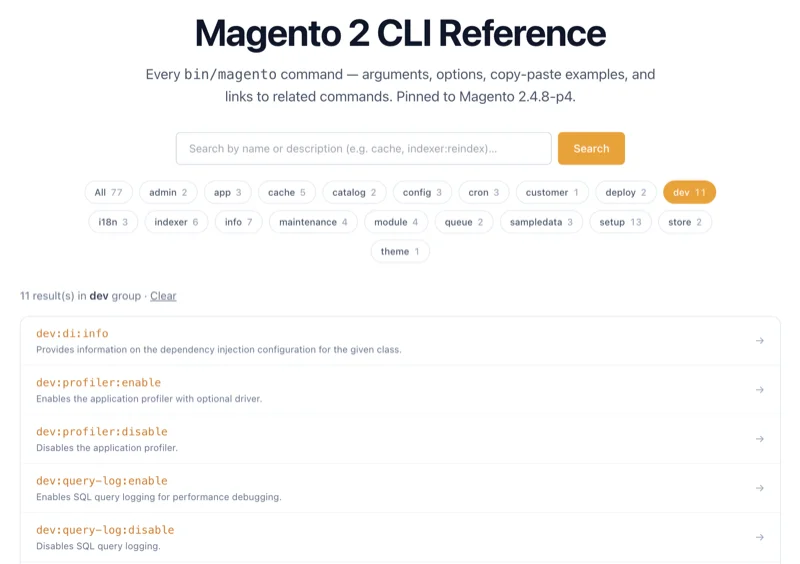
Magento 2 CLI Reference
Every bin/magento command, with arguments, options, and copy-paste examples.
Learn more →
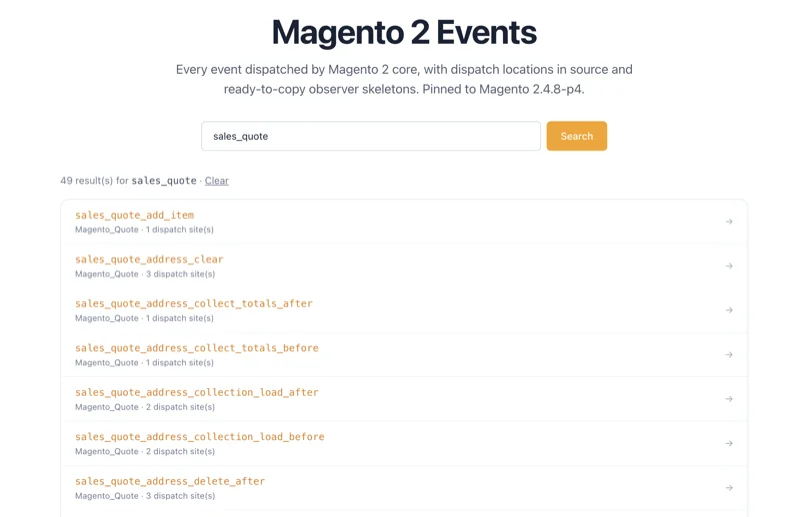
Magento 2 Event Catalog
Every event dispatched by Magento 2 core, with dispatch locations and ready-to-copy observer skeletons.
Learn more →
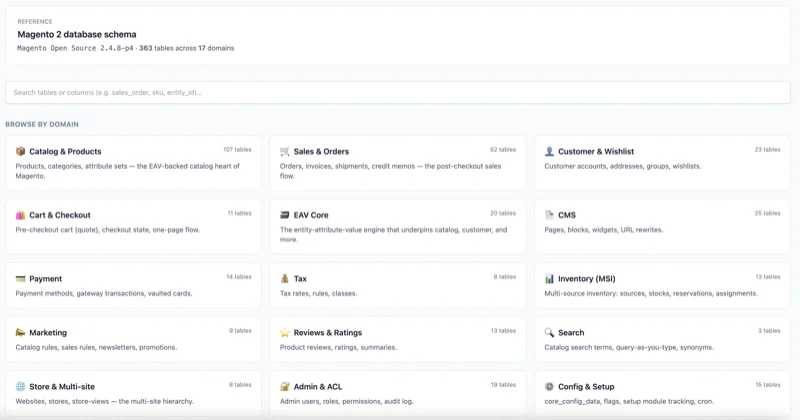
Magento 2 Database Documentation
Browsable Magento 2 schema with foreign-key graphs and instant search.
Learn more →
Every Magento dev tool, in one hosted workspace.
Free to sign up. Nothing to install. Drafts, audits, and projects saved across every tool.